
ACL tear in Vienna: diagnosis, ACL surgery and rehabilitation
Prompt assessment after your injury, ACL surgery when needed and structured rehabilitation until you return to sport.
Book appointment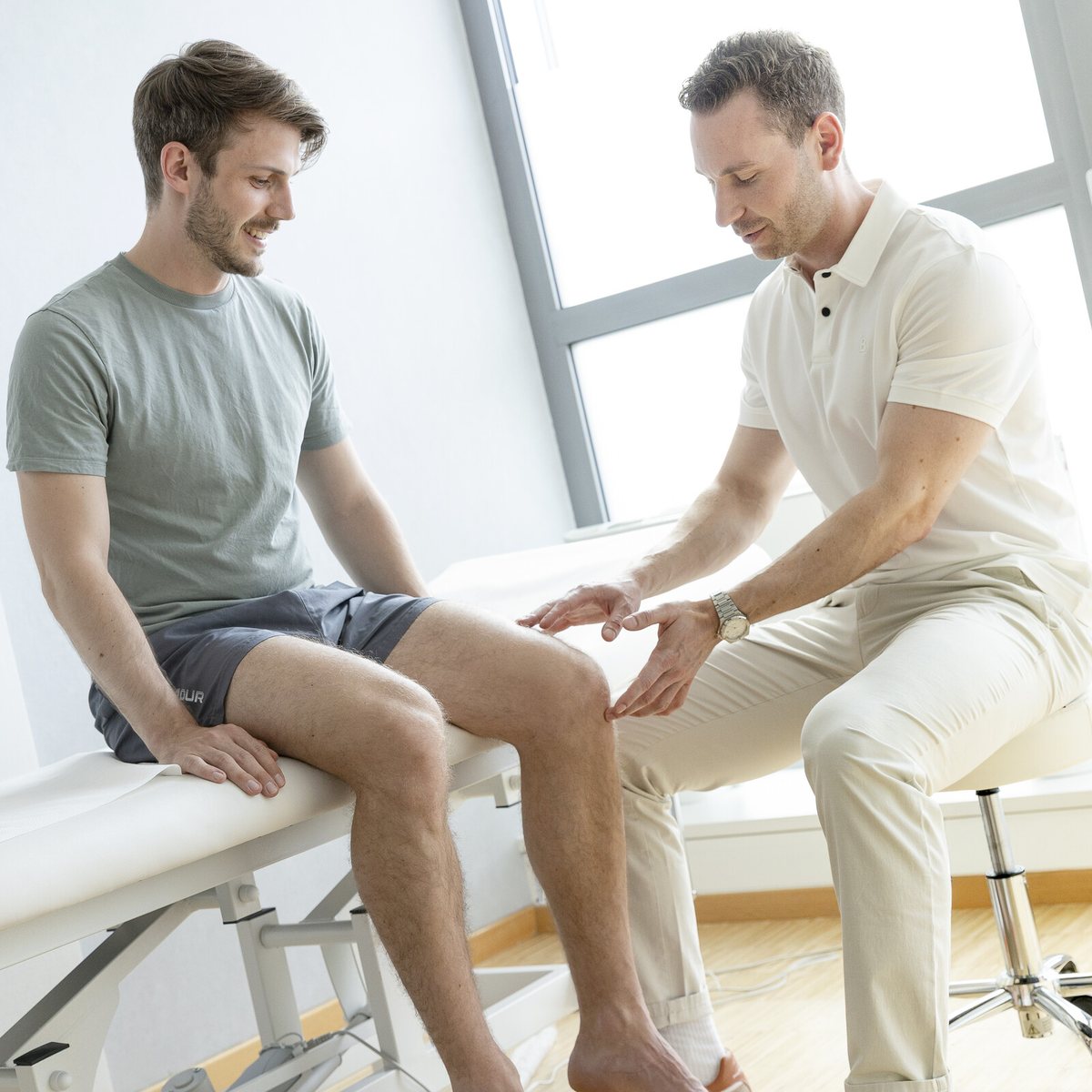
What is an ACL tear?
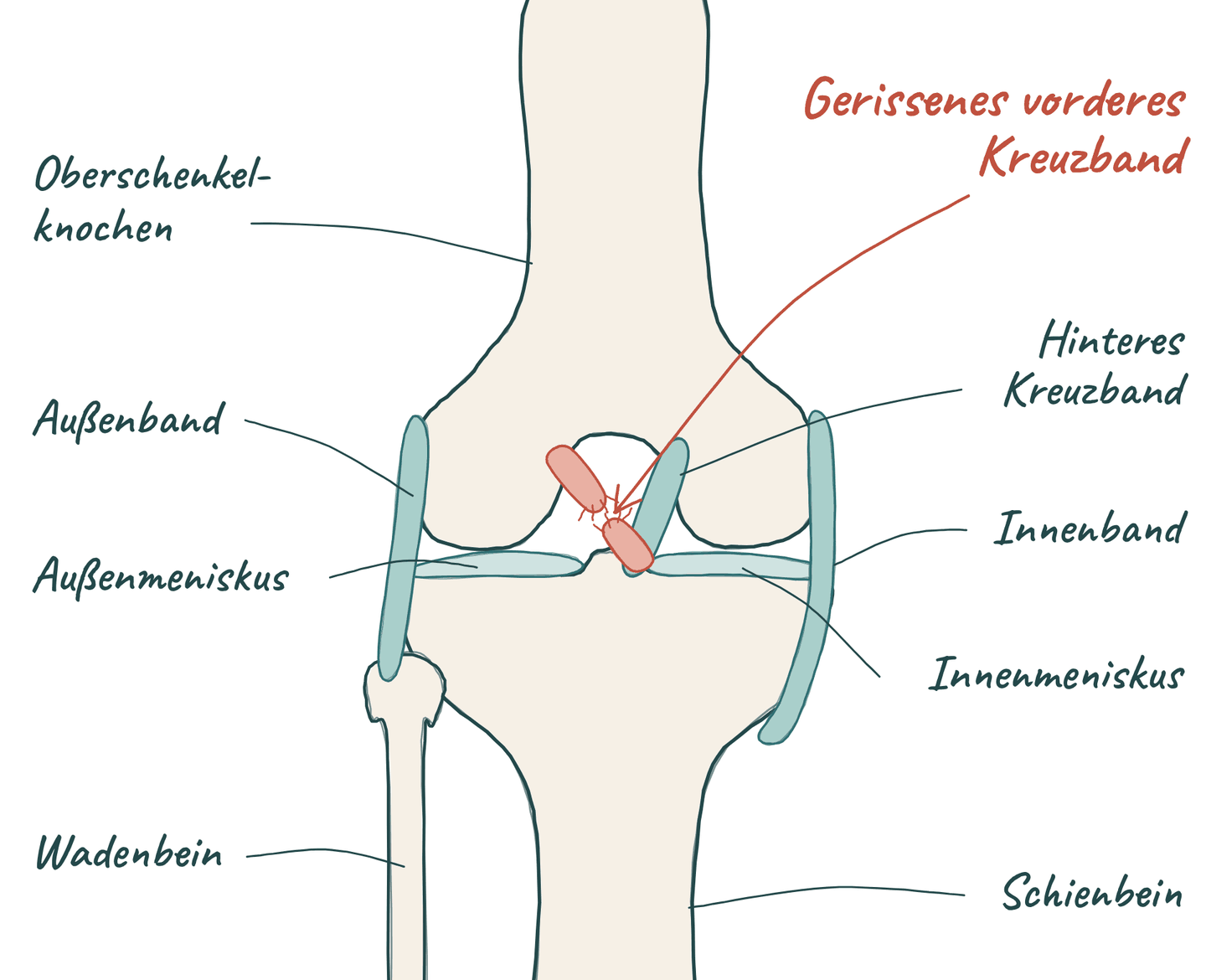
The anterior cruciate ligament (ACL) is one of the most important stabilisers of the knee joint. A cruciate ligament tear almost always means this ligament; doctors also call it an anterior cruciate ligament rupture. It prevents the lower leg from shifting forwards relative to the thigh and controls rotation in the knee. A tear typically happens during a sudden twisting movement or an abrupt change of direction – for example when skiing or playing football, basketball or tennis – often without any contact.
The ACL is often not the only structure injured: associated injuries to the meniscus, cartilage or collateral ligaments are common and decisive for choosing the right treatment.
Typical symptoms
Pain and swelling often settle after a few weeks – but the instability frequently remains. A specialist assessment is therefore worthwhile even if your knee feels good again.
The first days after the injury
If the ACL is torn, cooling, elevating and resting the knee help most in the first days. The aim is for the swelling to go down and for you to be able to straighten the knee fully again.
- Cooling and elevation: several times a day for about 15–20 minutes, never put ice directly on the skin
- Crutches: put as much weight on the leg as pain allows
- Brace: a knee brace can give you a sense of security at first but is not always necessary. We will decide whether it makes sense at your examination.
- Movement: gentle bending and straightening within the pain-free range helps prevent stiffness
Have your knee examined as soon as possible, even if it feels better after a few days. Associated injuries such as a locked meniscus are best treated early. After a fresh injury, an appointment is usually possible within a few days. If you need an appointment sooner than is available online, please call me directly: +43 660 428 07 79.
Diagnosis
We start with a detailed conversation about how the injury happened, your symptoms and your sporting and work demands. In the clinical examination, I test the stability of the knee with specific tests (such as the Lachman test and the pivot-shift test) and check the menisci, collateral ligaments and range of motion.
An MRI confirms the diagnosis and above all shows associated injuries to the meniscus, cartilage and ligaments.

I pay particular attention to injuries that are easily missed – such as ramp lesions of the medial meniscus or injuries to the anterolateral structures, which can be associated with marked rotational instability. I have also researched both topics. If needed, X-rays complete the diagnosis, for example to assess the leg axis or the slope of the tibial plateau (tibial slope).
Already had an MRI? Bring your images and report. A second opinion before a planned operation is always possible.
Suspected ACL tear?
After a fresh knee injury, a prompt examination is advisable. Please call me and we will find an urgent appointment. Other appointments at my practice in 1090 Vienna can be booked online. Please bring your MRI images if available.
Surgery or not? Making the decision
For people who play sport and for those whose knee is unstable in everyday life, I recommend surgery in many cases. What matters is not just the MRI, but above all your knee and your goals:
- Sport: pivoting, stop-and-go and contact sports such as football, skiing, tennis or handball
- Instability: the knee gives way in everyday life or during sport
- Associated injuries: a repairable meniscus tear or other ligament injuries
- Work: physically demanding work, working on ladders or uneven ground
In a large study, about half of the young, active patients initially treated without surgery later had an operation after all – 30 out of 59 (Frobell et al., BMJ 2013). Repeated giving way damages the meniscus and cartilage. That is why we discuss the decision early and together.
ACL surgery (ACL reconstruction)
In ACL surgery, also called ACL reconstruction, the torn ligament is replaced with one of your own tendons.
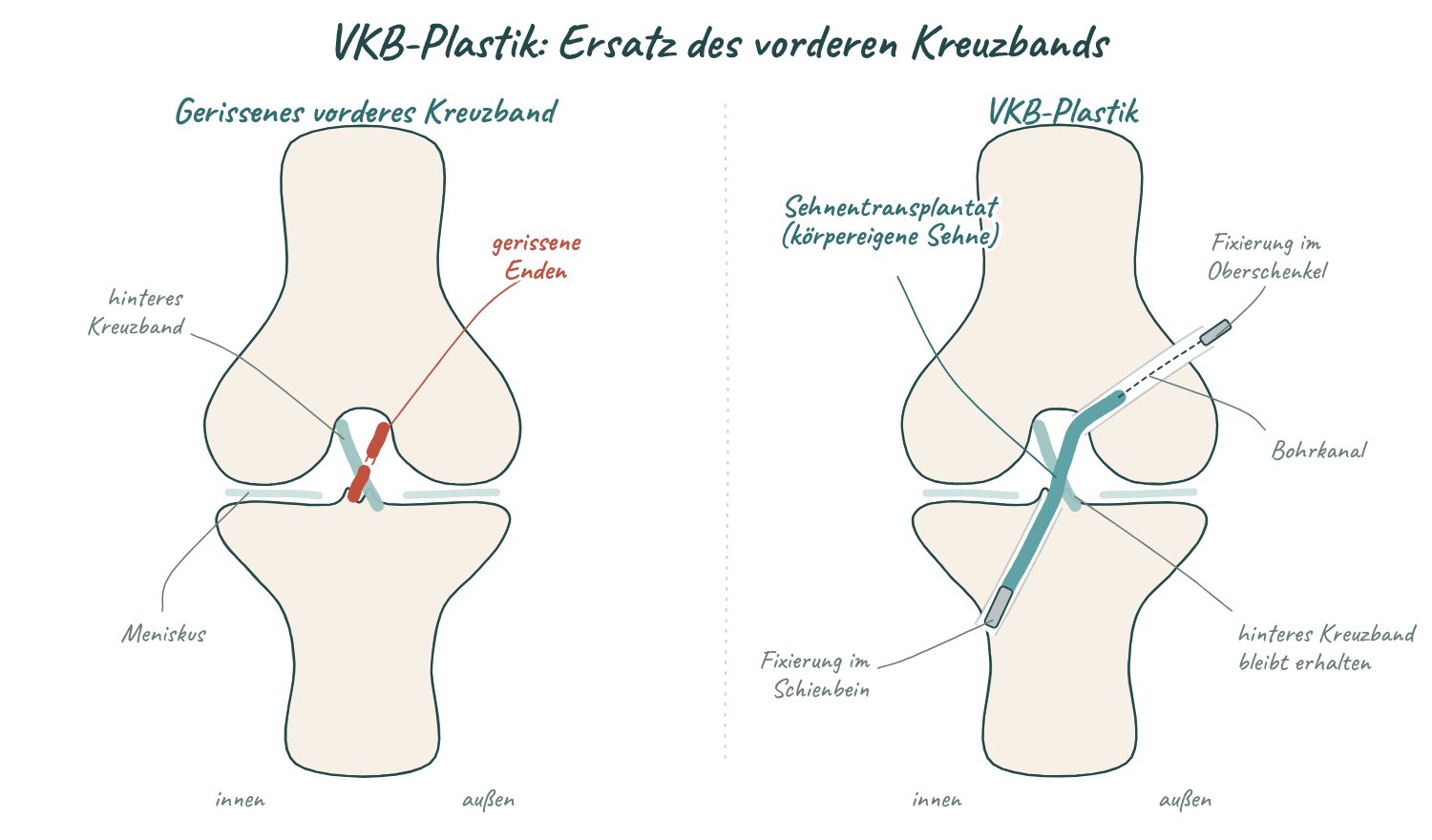
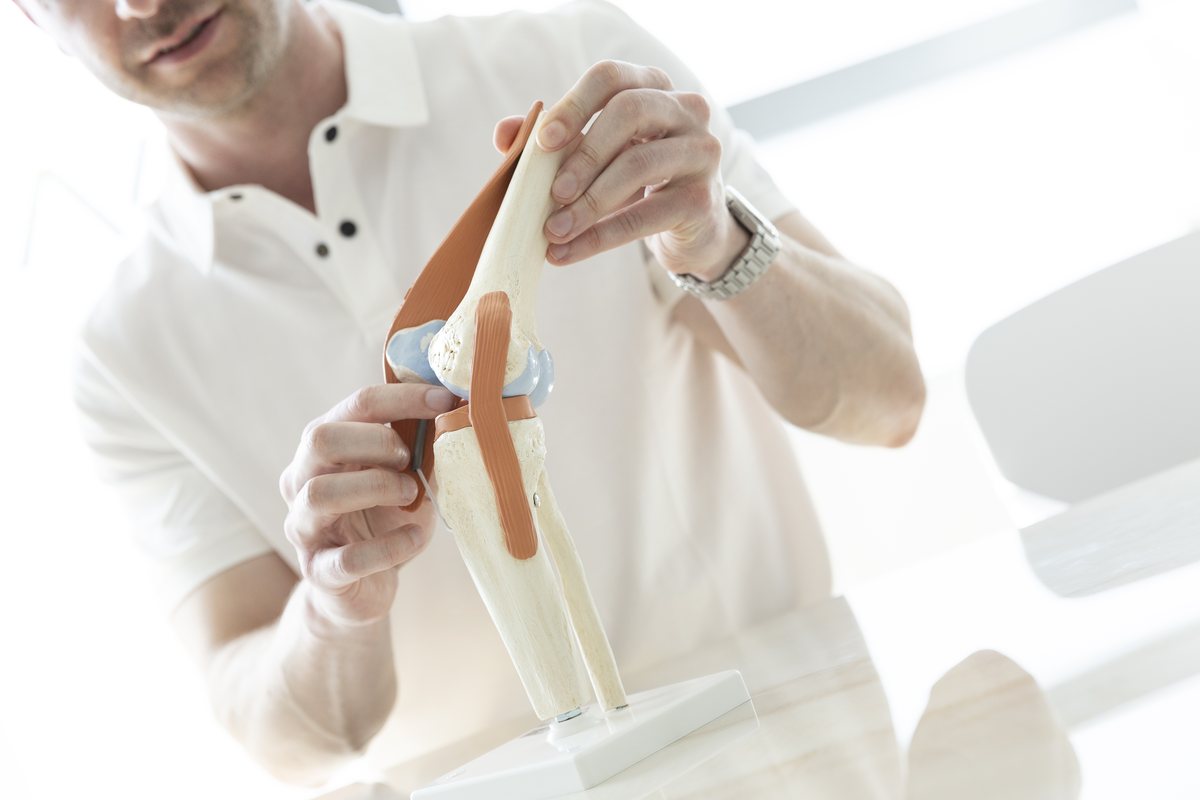
The operation is performed arthroscopically (keyhole surgery). The graft can be taken from the hamstring tendons (semitendinosus/gracilis), the quadriceps tendon or the patellar tendon. I choose the graft carefully and individually – depending on your sport, your job, your muscle strength and any previous operations. Other techniques may also be considered depending on the situation.
The graft is anchored in an anatomical position and grows in over the following months. Associated injuries are treated in the same operation; wherever possible, the meniscus is repaired and preserved.
The timing of surgery depends on your knee: as a rule, surgery is performed once the swelling has gone down and movement has been restored. In selected cases, early surgery may be advisable – for example if a locked meniscus prevents the knee from straightening.
Operations are performed at AKH Wien (Vienna General Hospital) or at Privatklinik Döbling. The operation takes about 1 to 1.5 hours, and you usually stay in hospital for 1–2 days.
Treatment without surgery
An ACL tear can be treated without surgery if the knee is stable in everyday life, there are no associated injuries requiring treatment and you do not wish to play sports with rapid pivoting and stop-and-go movements. The core is targeted training of strength, coordination and stability with physiotherapy. Regular check-ups are important: if the knee repeatedly gives way, the decision should be reconsidered.
Your path through my practice
I support you personally from your first appointment until you return to sport.
Rehabilitation and return to sport
Rehabilitation is just as important for the result as the operation itself. It is structured and closely coordinated with your physiotherapist. As a rough guide:
- First weeksReducing swelling & regaining movementwalking with crutches
- From about 6 weeksBuilding strengthtargeted training, exercise bike
- From about 3–4 monthsRunninggradual increase in load
- From about 9 monthsSportpivoting, contact and competitive sport after passing functional tests
Depending on the injury and any associated injuries, progress may be faster or slower. What matters is not just time, but strength, stability and quality of movement. Scientific data – including a recent study on ACL injuries in elite alpine skiing in which I was involved – show that a return to the previous level of performance is possible after careful treatment and rehabilitation.
Detailed rehabilitation plan after ACL surgery → (in German, also as PDF)
Frequently asked questions
Does an ACL tear need surgery?
For people who play sport and for those whose knee is unstable in everyday life, often yes. Whether surgery makes sense depends on the stability of your knee, associated injuries and your sporting and work goals. If your knee is stable and you do little pivoting sport, targeted physiotherapy may be enough.
Can an ACL tear heal without surgery?
A completely torn ACL usually does not heal in a way that restores its original stability. Pain and swelling settle, but muscle training can only partly compensate for the missing stability.
Do I need a brace after an ACL tear?
Not always. A knee brace can give a sense of security in the first days. Whether a brace is needed after surgery depends on associated injuries, such as a meniscus repair.
How long does ACL surgery take?
The operation itself takes about 1 to 1.5 hours, and you usually stay in hospital for 1–2 days. Rehabilitation until you return to pivoting and contact sport takes about 9 months.
How long will I be off work after ACL surgery?
This depends very much on your job. With mainly desk-based work, a return is often possible after about two to four weeks; with heavy physical work, usually after about 8 to 12 weeks.
When can I return to sport after ACL surgery?
Exercise bike usually from about 6 weeks, running from about 3–4 months. Pivoting, contact and competitive sport and skiing usually from about 9 months, after passing functional tests.
What is a partial ACL tear?
In a partial tear, only some fibre bundles are torn. Whether the knee is still unstable is shown mainly by the examination, not by the MRI alone. Treatment depends on this.
What does ACL surgery cost?
Operations are performed at AKH Wien or Privatklinik Döbling. How the fee, hospital costs and reimbursement are made up is explained on the Fees & insurance page.
I already have an MRI – is a second opinion useful?
Yes, especially before a planned operation. Bring your report and images to the appointment – together we will discuss which treatment makes sense for your knee.
How quickly can I get an appointment?
After a fresh injury, usually within a few days. Book online. If you need an appointment sooner, please call me: +43 660 428 07 79.
My research on the ACL
A selection of my scientific publications on ACL injuries:
- ACL injuries in elite alpine skiing reliably allow athletes to return to competition and perform at or above their pre‐injury level
- Comparison of patellofemoral osteoarthritis between patients treated surgically or non‐surgically following anterior cruciate ligament injuries: A systematic review and meta‐analysis
- Increased internal tibiofemoral rotation is associated with anterolateral ligament injury and high‐grade pivot‐shift in anterior cruciate ligament‐injured patients
- Elevated risk of patellofemoral osteoarthritis following ACL reconstruction compared to contralateral knees: A systematic review and meta‐analysis
- Survival of anterior cruciate ligament reconstruction in patients with Ehlers-Danlos syndrome: A comparison with anatomic risk factors in existing literature
- The role of Periostin as a biomarker of anterior cruciate ligament injury and potential therapeutic target to alleviate post-traumatic cartilage degeneration
Book an appointment
Have you injured your knee, is it unstable, or would you like a second opinion on your MRI report? Bring any existing images. Book your appointment at my practice in 1090 Vienna online. If you need an appointment sooner, please call me on +43 660 428 07 79.
Contact me!
I am happy to help with questions, appointments or a personal consultation.